Ancient Origins
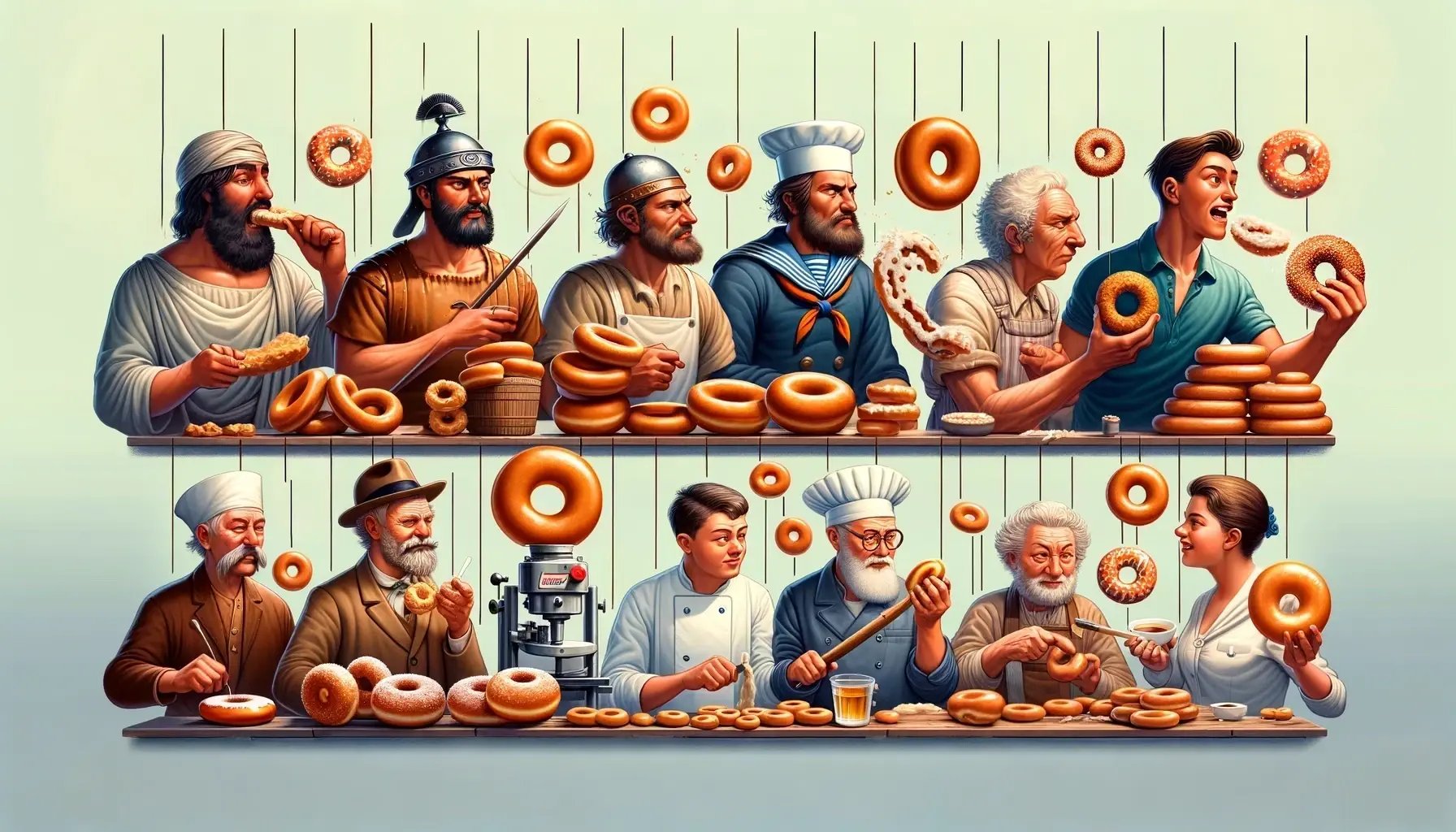
Fried dough has been enjoyed worldwide for centuries. Archaeologists have found traces of fried dough in prehistoric Native American settlements, and we know that ancient Romans and Greeks indulged in sweetened fried dough.
Dutch Influence
The history of the donut as we know it today can be traced back to Dutch immigrants in 17th and 18th century New York. These immigrants made fried dough balls called “olie koeken” or “olykoeks,” which means “oil cakes.” These treats were similar to modern donuts, though they didn’t yet have the iconic ring shape. The dough balls were filled with fruits and nuts to ensure the center cooked as evenly as the rest of the treat.
Literary Recognition
Washington Irving, a writer, described these olykoeks in his 1809 book, “A History of New York, from the Beginning of the World to the End of the Dutch Dynasty,” calling them “balls of sweetened dough, fried in hog’s fat, and called donuts.” It is widely believed that the term “donut” in the United States originated from Irving’s book, although there is some debate about this.
English Influence
In 18th-century England, before Irving’s book, the word “donut” was already used to describe small round cakes, such as ginger nuts and spice nuts. A similar donut recipe appeared in William Ellis’s 1750 book, “The Country Housewife’s Family Companion.” Some historians argue that these recipes were brought to America by English immigrants and could have influenced the development of the modern donut, rather than the Dutch olykoeks.
American Innovation
Regardless of their exact origins, donuts were fully embraced in the United States by the early 20th century. Around 1850, an American sailor named Hanson Gregory is said to have updated the iconic shape of the donut by punching or cutting out the center of the treat. This innovation ensured that donuts could be larger and still cook thoroughly without leaving a raw dough center or requiring additional fillings.
The Donut Machine
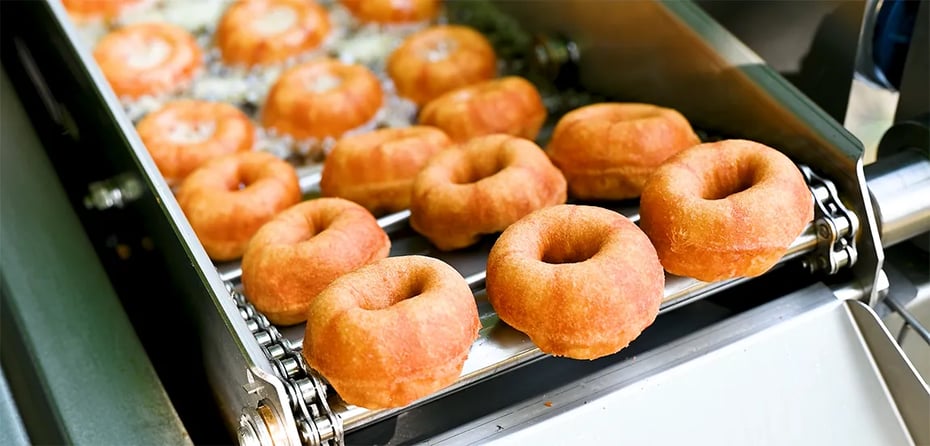
Adolph Levitt, a refugee from Russia, is often credited with creating the first donut machine, although some sources indicate other machines already existed. Levitt designed his version to make donuts for theatergoers who visited his bakery in New York. Fresh donuts from an automatic donut machine were showcased at the 1933-34 World’s Fair as the “food hit of the century of progress.”
Krispy Kreme’s Beginnings
In the following years, the first Krispy Kreme donuts were sold by Vernon Rudolph. Initially, he rented a building to make donuts and sell them to local stores in 1937. However, so many passersby, intrigued by the smell, stopped to ask if they could buy fresh donuts that he cut a hole in the outside wall to sell to pedestrians on the street. Krispy Kreme shops later became known for their large windows, allowing customers to see the doughnuts being made.
Popularization and Modernization
In the 1930s, the Donut Corporation of America, founded by Levitt, encouraged people to dip their donuts in coffee, tea, or milk to boost sales. The first Dunkin’ Donuts, known for both coffee and donuts, opened in 1950. Donut shops continue to thrive worldwide in the 20th and 21st centuries, with innovations in flavors, textures, and ingredients.
Source: Britannica